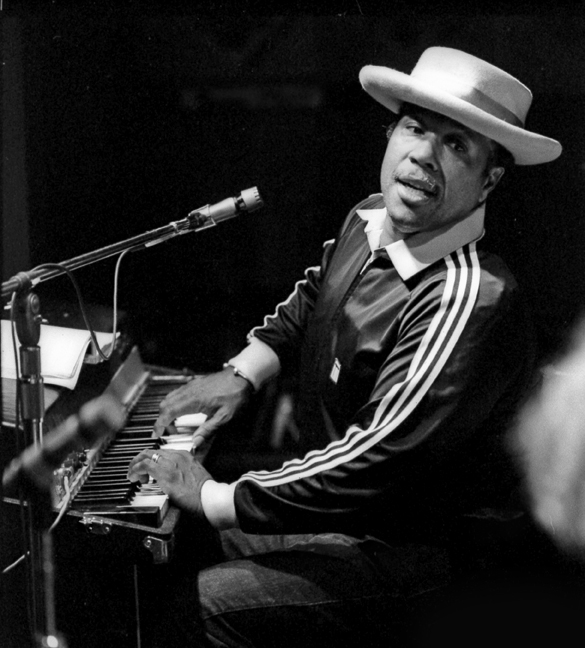
Les McCann
From the East End to the world. A Lexington musician’s life in jazz, soul, and creative expression.
Explore Les McCann
Lexington, Kentucky
People, places & living culture.
Begin at the Lyric. Follow the stories outward.
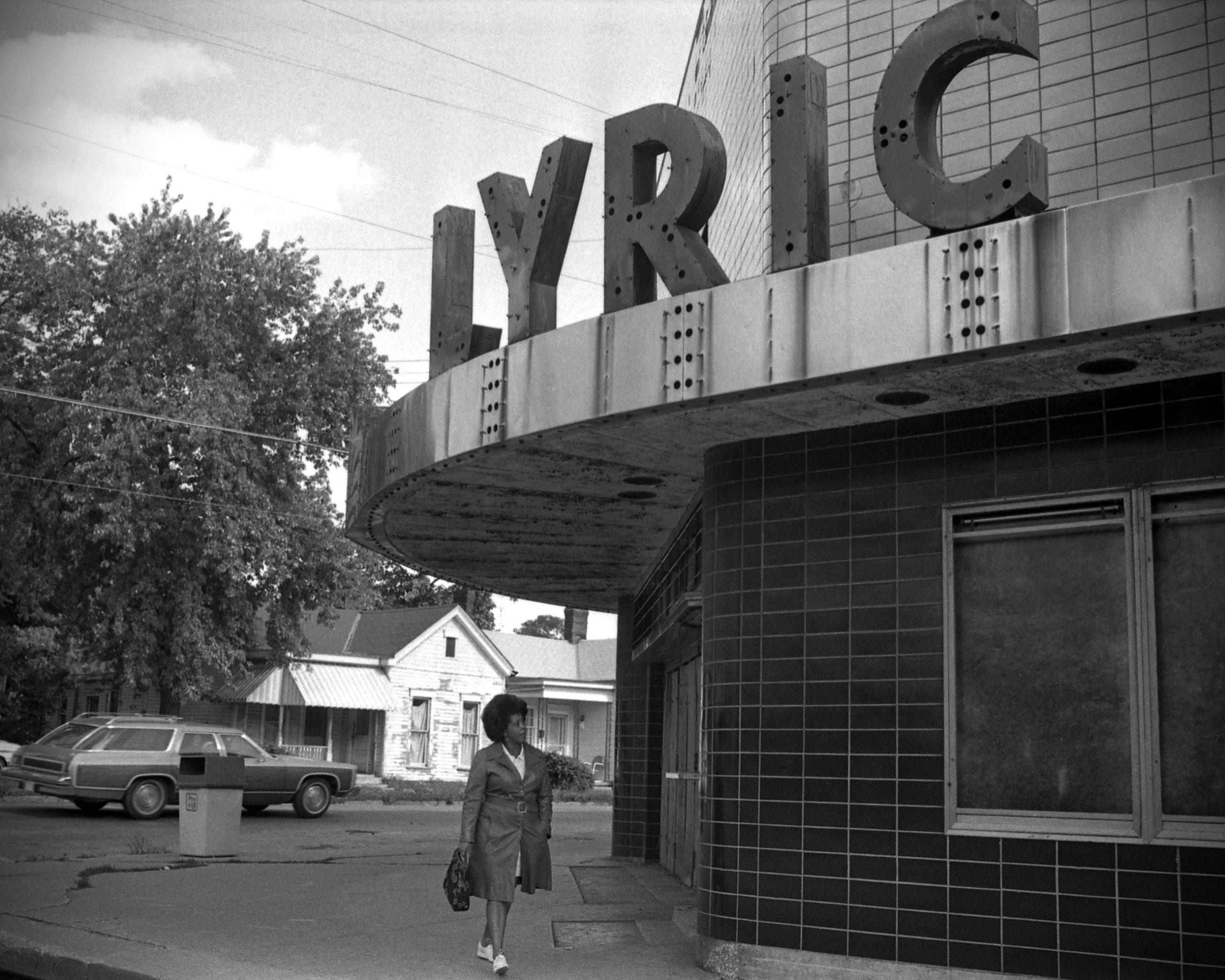
Lyric street scene, identified as 1974 in the Historic Lyric Theatre website archive.
Discover the musicians, horsemen, business owners, and neighbors whose stories connect Lexington to a wider American history.
Follow a musical life from the East End to international stages. Explore a racing legacy. Meet the businesses around the theatre.
From the East End to the world. A Lexington musician’s life in jazz, soul, and creative expression.
Explore Les McCann
McCann: Brian McMillen, 1980, Wikimedia Commons, CC BY-SA 4.0; card display cropped by layout, full photograph below. Murphy: Library of Congress, LC-DIG-ppmsca-55327, no known restrictions on publication. Lyric street image: Historic Lyric Theatre website archive, identified as 1974.
Lexington native · East End roots
A musical voice that carried a hometown connection into an international career.
Born in Lexington in 1935, pianist and vocalist Les McCann grew up in the East End. His life connects the neighborhood’s history to the wider story of American music. [1, 2]
Following military service, McCann developed his career in California. His trio, Les McCann Ltd., became part of the Los Angeles music scene, and he recorded for Pacific Jazz. [1]
McCann brought jazz into conversation with soul, funk, and electronic instruments. His recordings became a source for later musicians through sampling, extending the reach of his work beyond its original audiences. His creativity also included painting and photography. [2]
His 1969 Montreux performance of “Compared to What,” with saxophonist Eddie Harris, became a landmark recording. The song was written by Gene McDaniels. [3]
NAMM’s Oral History Collection preserves an interview with McCann recorded on November 6, 2015. Visit the collection to hear his account of his musical life.
Visit the oral-history interviewBorn in Lexington, September 23. [2, 3]
Records “Compared to What” with Eddie Harris at Montreux. [3]
Inducted into the Kentucky Music Hall of Fame. [1]
NAMM records his oral-history interview. [3]
Additional accounts of McCann’s work at the original Lyric are being checked against original testimony. This exhibit does not assert an original-Lyric performance.
Sport · Work · Community
Exceptional riders and the people behind the horses belong at the center of Kentucky’s racing history.
Oliver Lewis rode Aristides to victory in the first Kentucky Derby in 1875. Isaac Murphy became the first jockey to win the Derby three times, with victories in 1884, 1890, and 1891. [1, 2]
Murphy’s career connects directly to Lexington. University of Kentucky educational material places his first victory at the Kentucky Association racetrack in September 1876. [3]
Before Keeneland, the Kentucky Association track hosted racing near downtown Lexington. It held its final meet in spring 1933. Keeneland opened on October 15, 1936. [4]
Murphy entered the Racing Hall of Fame in 1955. His biography also shows why historical statistics need care: surviving accounts give different career totals and winning percentages. The achievement is clear; the precise record needs qualification. [2]
The next stage of this exhibit will follow trainers, grooms, stable workers, and families through named records. A historical map will be added after the former track’s boundaries have been verified.
Oliver Lewis wins the first Kentucky Derby. [1]
Murphy’s first victory at the Kentucky Association track. [3]
Murphy wins his third Kentucky Derby. [2]
The Kentucky Association track holds its final meet. [4]
Track formation, land acquisition, and racing opening are separate events. A detailed ownership chronology is still in development.
The neighborhood around the Lyric
Follow the story beyond the marquee, into the homes and businesses of Black Lexington.
By the late nineteenth century, Deweese Street was predominantly an African American residential and business district, according to Kentucky Historical Society marker 2562. [1]
The marker names four establishments: the Derby Sandwich Shop, Domestic Life and Accident Insurance Company, Club Hurricane, and Sterling Barbershop. These businesses provide a starting point for recovering the district’s working life. [1]
When the Lyric opened in December 1948, it joined a district that already connected home, enterprise, and social life. The theatre became an anchor for business and entertainment. [1]
The marker also identifies housing segregation and discriminatory real-estate practices as part of the neighborhood’s history. Its cultural vitality developed within restrictions that shaped where Black Lexingtonians could live. [1]
Named in Kentucky Historical Society marker 2562.
Named in Kentucky Historical Society marker 2562.
Named in Kentucky Historical Society marker 2562.
Named in Kentucky Historical Society marker 2562.
Business addresses, ownership, operating dates, and photographs will be added as individual records are located. The district’s remembered nicknames and street-renaming chronology need further documentation.
Music, education, medicine, and the pursuit of freedom connect Lexington to a wider Black American history.
These profiles begin with documented local connections, then follow the work people carried into the world.
Lexington native · Education & civic life
Born in Lexington in 1855, Mary Ellen Britton worked as an educator, journalist, physician, and advocate for voting rights and racial equality.
She taught in Lexington’s schools and helped establish the Kentucky Negro Education Association in 1877. Her community work included the Lexington Woman’s Improvement Club and the Ladies Orphan Society, which founded the Colored Orphan Industrial Home in 1892.
Britton’s career connects classrooms, medical care, and public advocacy. Fayette County Public Schools records her medical licensure in 1902. A Lexington middle school bearing her name opened in August 2025.
Read the school’s account of Britton’s lifeLexington native · Composition & performance
Composer, conductor, singer, and teacher Julia Perry was born in Lexington on March 25, 1924. She studied at Westminster Choir College and later worked with composers Luigi Dallapiccola and Nadia Boulanger in Europe.
Her music invites listeners into another part of Black cultural history: concert composition, ambitious experimentation, and the work of an artist whose repertoire continues to be rediscovered.
Perry’s legacy returned to the Lyric through the Lexington Philharmonic’s Sorrow, Strength, & Love program on September 20, 2021. Performances in the Community Room and Main Hall included her wind, chamber, and vocal music.
Explore Perry’s music with LexPhilLewis: Lexington connection · Harriet: Kentucky connection
Lewis Hayden was born enslaved in Kentucky and is identified with Lexington in National Park Service educational material. Harriet Hayden was also born enslaved in Kentucky; her early life is less fully documented.
They escaped slavery with their son in the 1840s and eventually settled in Boston. Their home became a refuge for people seeking freedom and a meeting place for abolitionists.
Harriet provided food, shelter, and protection. Lewis worked with the Boston Vigilance Committee, recruited Black soldiers during the Civil War, and later served in the Massachusetts legislature. Their story places family action and everyday care beside public organizing.
Read Lewis’s biographyThe festival’s own history traces its beginnings to African American activists and leaders organizing cultural and educational programming in 1989 to celebrate the East End.
Read the festival’s accountBorn in Mays Lick, Kentucky, in 1864, Young became a soldier, diplomat, and the first Black national park superintendent. Remembered as Colonel Young, he was posthumously promoted to brigadier general in 2021.
Explore the National Park Service biographyThe Lexington park and community center named for Young offer a separate local story. The National Register record provides a starting point for researching the building, recreation, and community life.
View the National Register record