

History lives here
Where Champions
Were Made
The Kentucky Association Track
& Lexington’s Black Horsemen
Long before the horses ran at Keeneland, they ran in Lexington’s East End.Scroll to follow the track
1826 → 1828
Before Keeneland,
there was the East End
The Kentucky Association organized in 1826 and established its Lexington racecourse by 1828. Set northeast of downtown near today’s East Fifth and Race Streets, its roughly one-mile oval, stables and grandstand made this ground a major center of Thoroughbred racing for more than a century.
One ground · layered memory
Then & Now
Move the divider to compare the former racecourse with the East End today.
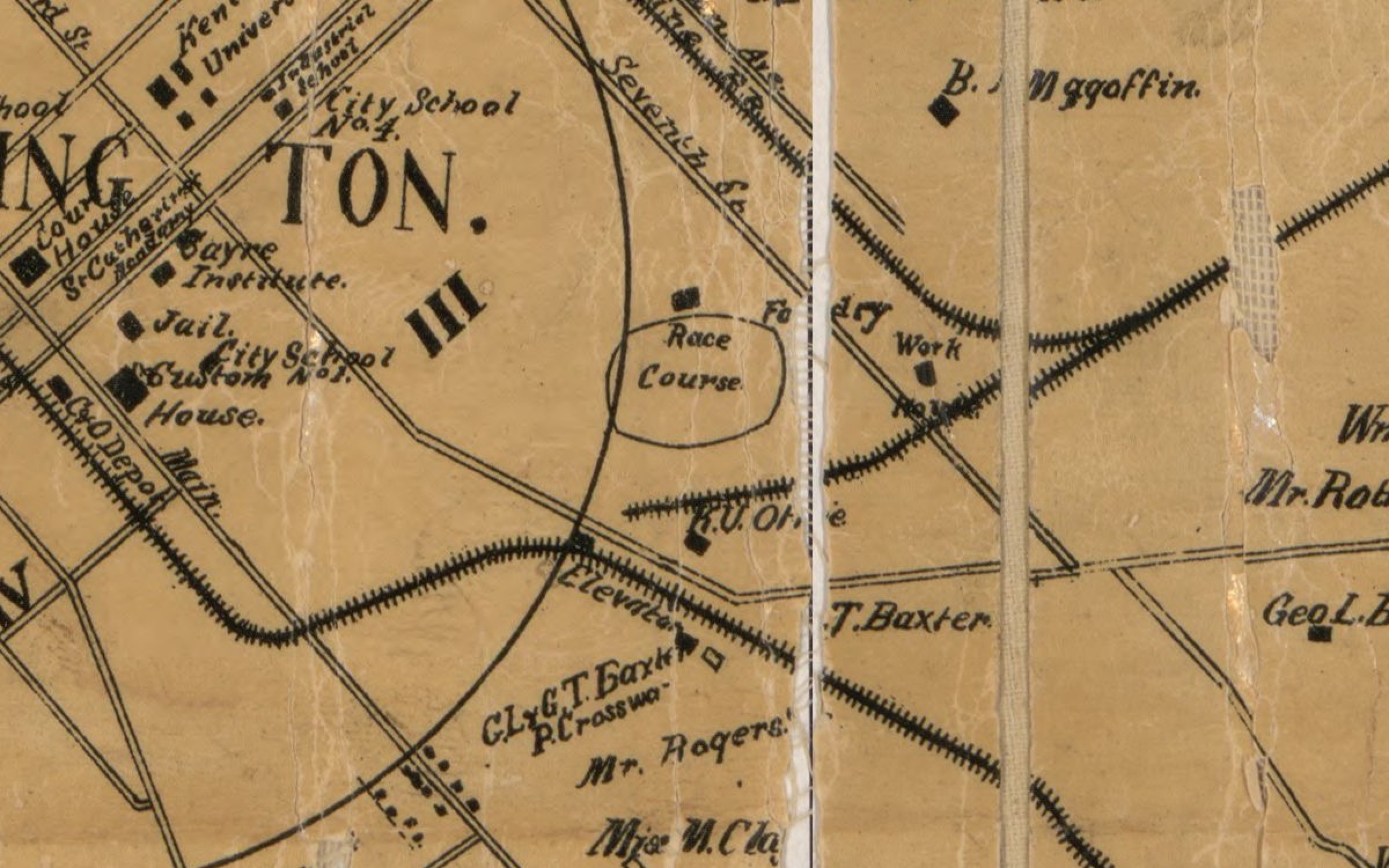 THEN · 1891
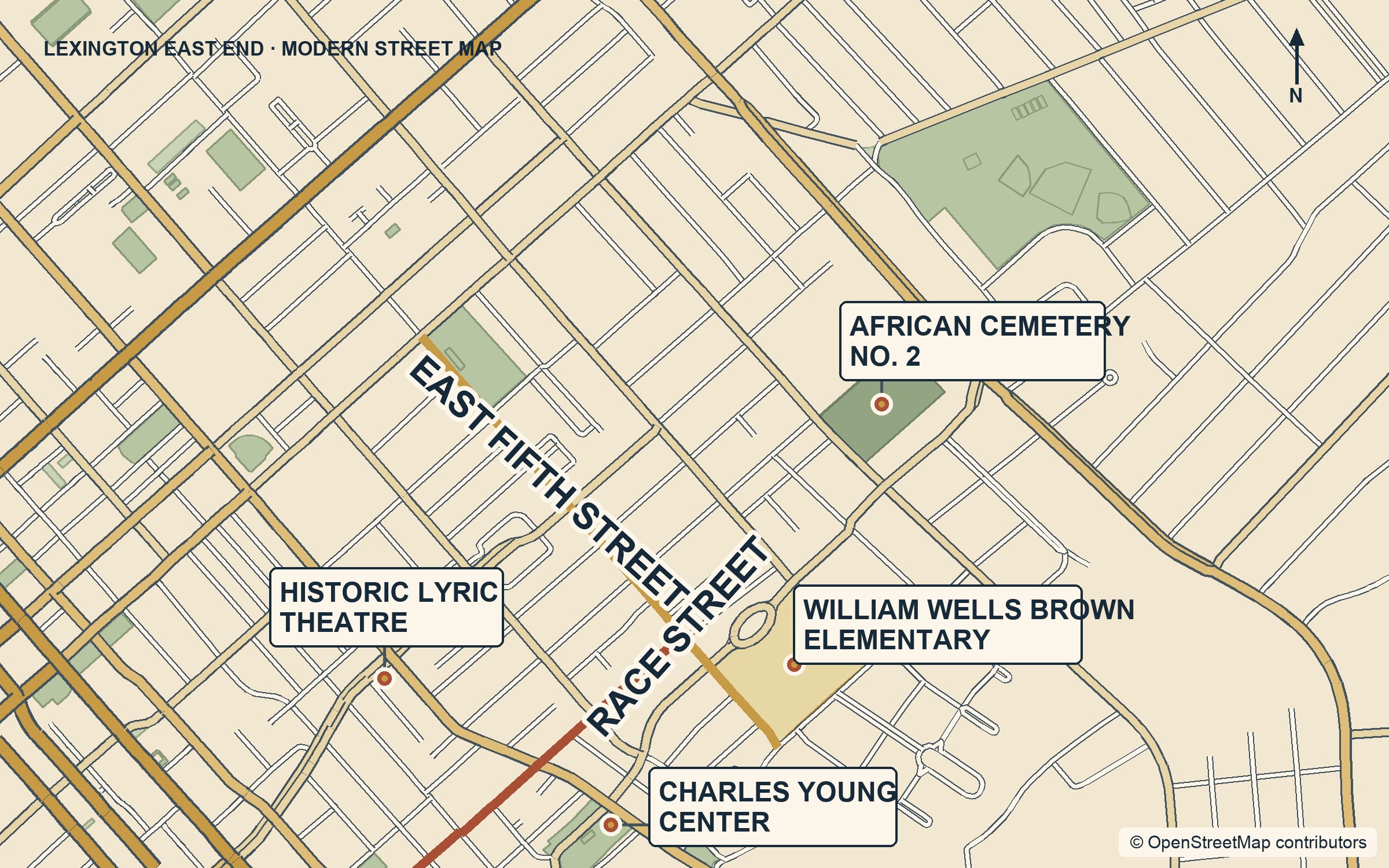 TODAY
TODAYApproximate former track footprint
Location key
- 1Race Street
- 2East Fifth Street
- 3William Wells Brown Elementary
- 4Historic Lyric Theatre
- 5African Cemetery No. 2
- 6Isaac Murphy Memorial Art Garden
- 7Charles Young Center
- 8Palmer Pharmacy / WayPoint
The former Kentucky Association Track outline and pins are interpretive and approximate. They are presented to help visitors understand relative geography, not as a parcel survey.
Historical: W. R. Wallis, 1891 · Library of Congress, Geography and Map DivisionModern: © OpenStreetMap contributors
Work · knowledge · enterprise
The East End
& the Horse
The East End did not simply sit beside Lexington’s racing industry. Black jockeys, trainers, grooms, hostlers, stable workers, owners, entrepreneurs and families made lives around the track and supplied knowledge and labor essential to the city’s early Thoroughbred economy.
The East End didn’t simply sit beside Lexington’s racing industry. Its people helped build it.
An extraordinary concentration of talent
Four Hall of Famers.
One neighborhood.
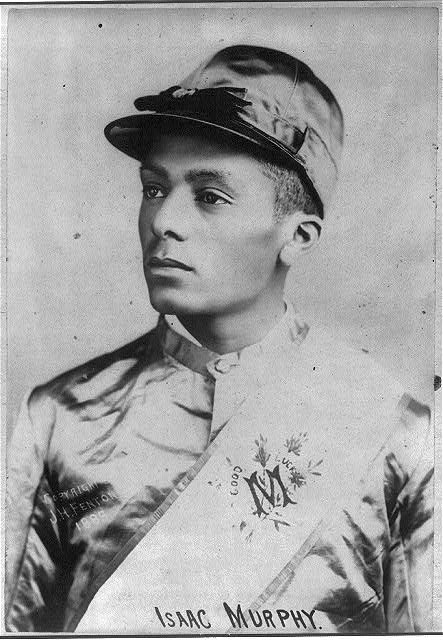
Jockey
Isaac Burns Murphy
3× Kentucky Derby winnerRaised in Lexington, Murphy became one of American racing’s most celebrated jockeys. His precision, judgment and record connected the East End to national racing immortality.
permission required
Jockey
Jimmy Winkfield
Back-to-back Derby winnerWinkfield won consecutive Kentucky Derbies before building an extraordinary international career in Russia and France, carrying an East End story far beyond Lexington.
permission required
Trainer
Ansel Williamson
Trainer of the first Derby winnerBorn enslaved, Williamson became one of the nineteenth century’s outstanding trainers and prepared Aristides to win the inaugural Kentucky Derby in 1875.
permission required
Jockey · Trainer · Owner
Edward Dudley Brown
From saddle to ownershipBrown advanced from jockey to trainer and owner, a remarkable arc of skill, business leadership and professional independence for a Black horseman of his era.
From the East End to racing immortality
A standard
of greatness.
1884 · 1890 · 1891
- Lexington’s East End
- Kentucky Association era
- Three Derby victories
- National Racing Hall of Fame
The community behind the champions
And many more.
Champions were never made alone.
Champions were never made alone. African Cemetery No. 2 researchers have identified 159 men connected to racing among those buried there, including jockeys, trainers, grooms, hostlers and stable hands. Their names widen the story beyond fame and victory.
Skill lived in every role
The people
behind the horses
Their work helped build an industry. Their community helped build Lexington.
Jockey
Jockeys paired exceptional balance, tactical judgment, courage, and intimate knowledge of each horse to guide racing performances under intense physical demands.
Library of Congress, Prints & Photographs Division, LC-USZ62-50155 (opens in a new tab)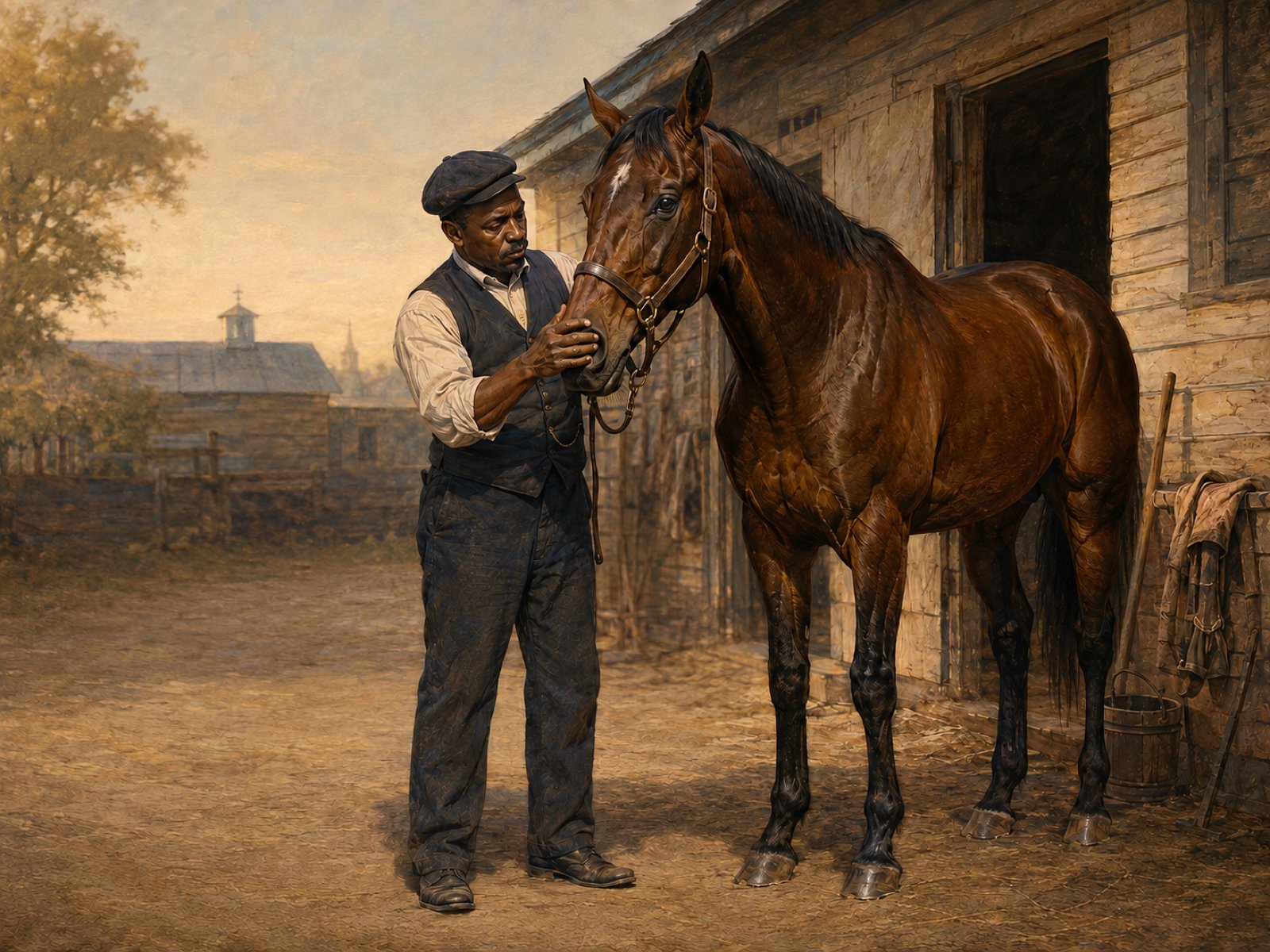
Trainer
Trainers planned conditioning, studied each horse’s temperament and soundness, directed stable routines, and made the daily decisions that prepared horses to compete.
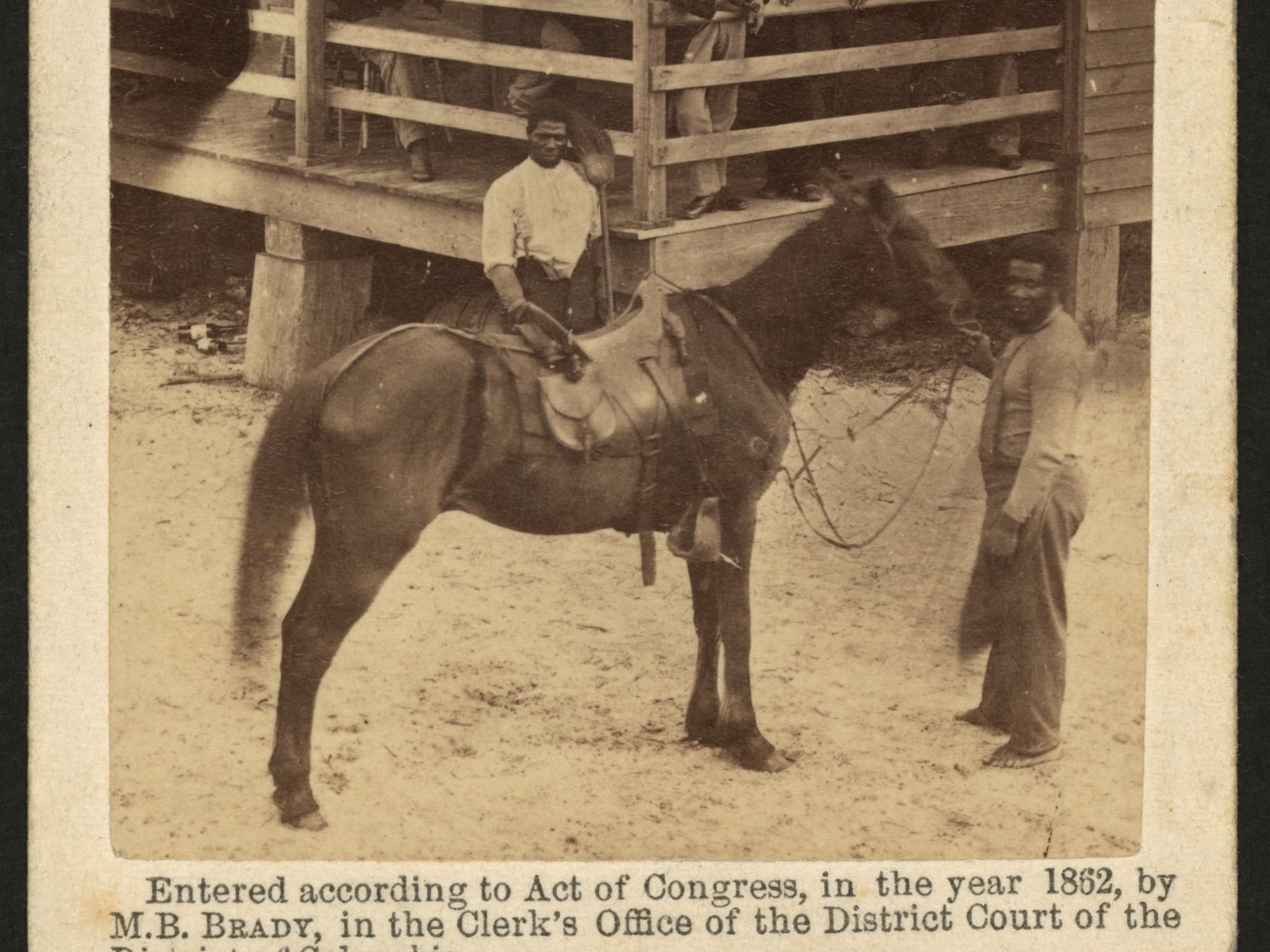
Groom
Grooms provided close daily care—feeding, brushing, cooling, wrapping legs, watching for illness, and building the trust that made every other racing role possible.
Mathew B. Brady, [African American men tending a horse], [1862?]. Library of Congress, Prints and Photographs Division, LC-DIG-ppmsca-10872. Representative scene; not documented as Lexington or the Kentucky Association Track. The exact occupations of the depicted men are not documented. (opens in a new tab)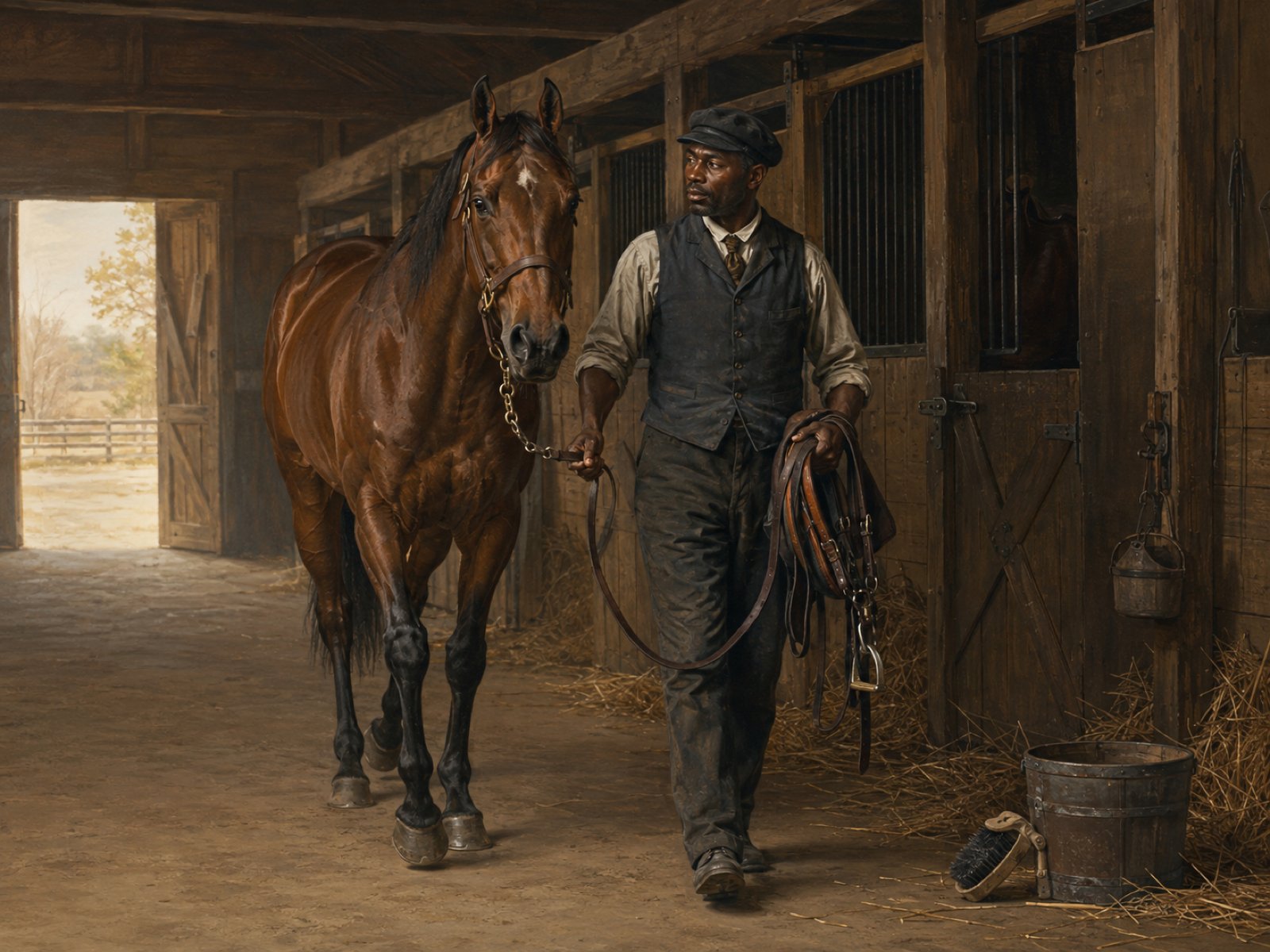
Hostler
Hostlers managed horses in the stable, maintained stalls and equipment, handled arrivals and departures, and kept the working life of the barn organized and safe.
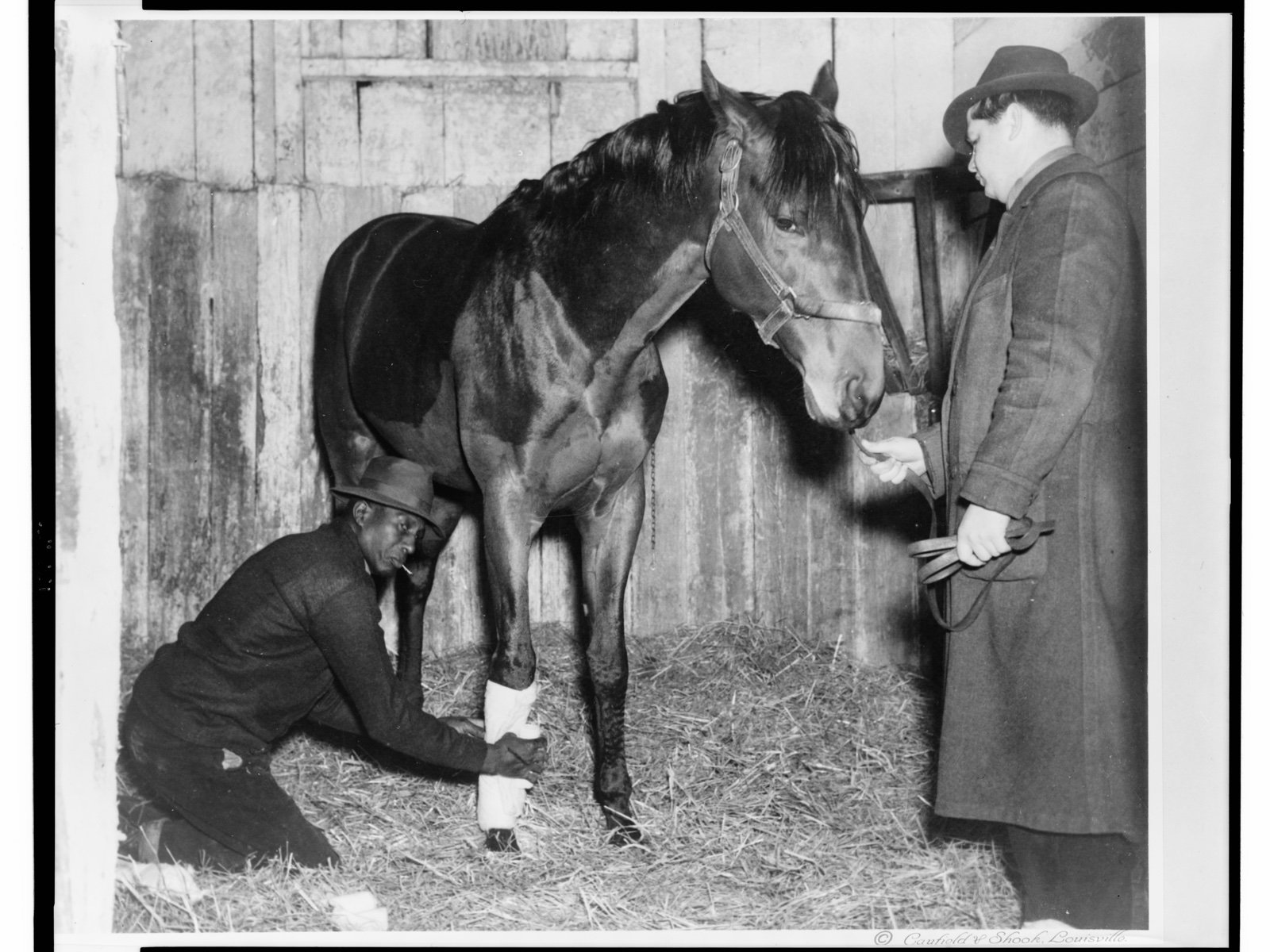
Stable hand
Stable hands carried out the demanding routines of feeding, watering, cleaning, walking, and caring for horses—the essential labor beneath every race-day performance.
Caufield & Shook, copyright claimant, Putting a bandage on, c1940 June 6. Library of Congress, Prints and Photographs Division, LC-USZ62-133950. Representative scene; not documented as Lexington or the Kentucky Association Track. The exact occupations of the depicted men are not documented, and the image was made after the track closed. (opens in a new tab)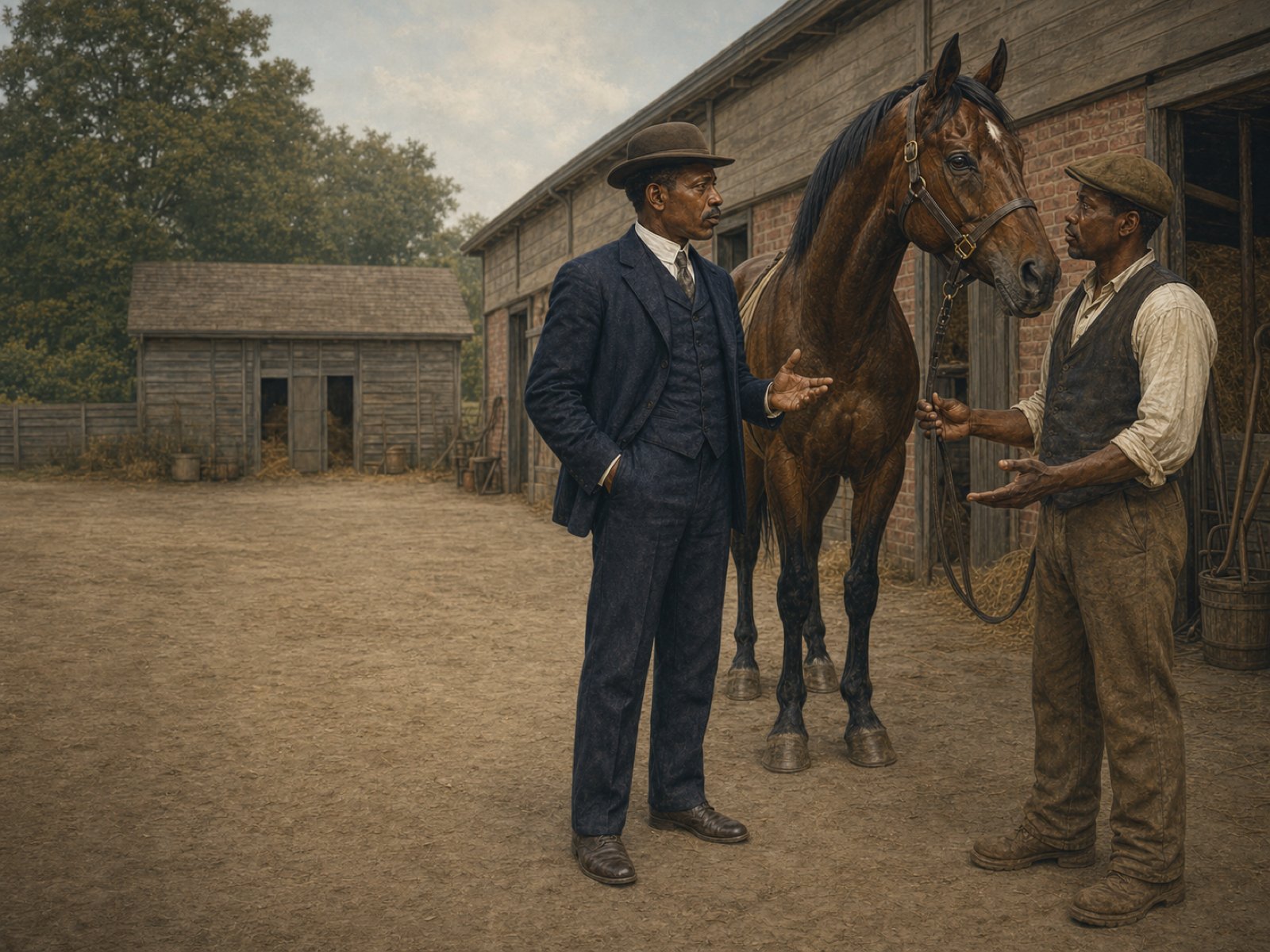
Owner
Black owners invested in horses and racing enterprises, negotiated within a restrictive industry, and pursued a rare measure of professional independence and economic control.
Traditions with East End roots
Born on this track
Before some of these names became Keeneland traditions, their histories began—or developed important chapters—at the Kentucky Association Track.
Known today as the Phoenix Stakes, this tradition traces its origin to the Kentucky Association course.
The race evolved in name and format across its long history.
First run at the Association course in 1911; it ran there in 1911–14 and 1919–26 before becoming a Keeneland tradition in 1937.
Keeneland continued the name and tradition after opening as a separate institution.
The modern Ashland Stakes began at Keeneland in 1936.
The modern Ashland Stakes was inaugurated at Keeneland in 1936. It shares its Henry Clay/Ashland naming lineage with the Kentucky Association’s earlier Ashland Oaks; this panel does not present them as one uninterrupted race.
First run at the Association course in 1910 and renewed there through 1930 before its later Keeneland life.
The modern race continues at Keeneland, a different institution and site.
The Ben Ali began at the Association track in 1917; its last running there came in 1922 before revival at Keeneland in 1937.
The race’s history includes a gap between the Association and Keeneland eras.
Before they were
Keeneland traditions...
They were
East End traditions.
Keeneland and the Kentucky Association were separate institutions. The continuity lies in racing traditions, people and memory.The ground changes · memory remains
One place.
Four eras.
Kentucky Association Track
Thoroughbred racing becomes part of the East End landscape.
The track closes
The final meet ends more than a century of racing at the site.
Bluegrass–Aspendale
The former track property enters another major chapter of East End community history through public housing.
A neighborhood carrying memory
William Wells Brown Elementary, Equestrian View and nearby landmarks stand on and around the former footprint.
Different stages · the same East End
From the track
to the Lyric
The Kentucky Association’s final meet came in 1933. Fifteen years later, the Lyric Theatre opened in 1948. They were not simultaneous institutions, but successive chapters of the same East End—places where Black talent, enterprise and community shaped Lexington’s identity.
The setting changed from racetrack to theater, but the spirit of the East End endures.
Keep following the story
The legacy continues
Read all map locations as text
- Race Street: The modern street name preserves the memory of the Kentucky Association racecourse.
- East Fifth Street: The former course occupied land around modern East Fifth and Race Streets.
- William Wells Brown Elementary: The school is among the modern landmarks occupying or bordering the former track footprint.
- Historic Lyric Theatre: Opened in 1948, the Lyric represents a later East End stage for Black culture and community life.
- African Cemetery No. 2: The cemetery preserves the resting places and stories of many African American racing workers.
- Isaac Murphy Memorial Art Garden: A public memorial landscape honoring the champion jockey and Lexington’s Black racing heritage.
- Charles Young Center: A longstanding East End civic and recreation landmark within the neighborhood’s layered history.
- Palmer Pharmacy / WayPoint: A historic Black business site that continues serving East End community life.