

THE CHITLIN’ CIRCUIT
The roads, rooms and stages that helped change American music.
LEXINGTON, KENTUCKY WAS PART OF THE STORY.
Follow the music · watch & listen ↓More than
a circuit.
The Chitlin’ Circuit was not one company, one booking office, or one road drawn on a map.
It was an evolving network of theatres, clubs, ballrooms, juke joints, restaurants, hotels, boarding houses, promoters, musicians, comedians, dancers, entrepreneurs, and audiences. Its routes shifted with time, geography, opportunity, and danger.
During segregation, Black communities built and sustained places where performers could work, develop, and be received on their own terms. These rooms were laboratories of live performance and engines of local life.
Why
“chitlin’?”
A name rooted in gathering.
“Chitlin’” refers to chitterlings, a food with deep associations in African American Southern life. The name carried the sound of kitchens, weekend gatherings, shared tables, and community celebrations.
The term should not be reduced to a joke or stereotype. It speaks to cultural memory and to the resourcefulness of communities that transformed what was available into nourishment, livelihood, and occasion.

When other
doors were closed.
An artist could fill a theatre at night and still be denied a hotel room after the curtain fell. Touring required not only talent and stamina, but knowledge: which roads were safer, which businesses would serve Black customers, and whose home could offer a bed.
The Negro Motorist Green Book documented hotels, restaurants, gas stations, and other businesses Black travelers could use with greater confidence. It was not a directory of the Circuit, but it reveals the larger world through which Black performers moved.
Behind every successful tour stood an infrastructure rarely named on the marquee.
How a town became a sanctuary
Hobson City, Alabama, shows why the Circuit depended on communities as much as stages. This short follows the town’s fight for independence and survival.
Watch at the original source ↗
Press play to load the original player. Availability depends on the provider; use the source link if playback is unavailable.
Before America
heard them.
These stages helped build the legends.
There were no second takes. Performers learned to read a room, recover from failure, stretch a song, tighten a joke, change the order of a set, and meet an audience’s energy without losing their own voice.
Long engagements built stamina. Competition sharpened musicianship. Dancers refined precision; comedians learned timing; singers developed phrasing and command. The Circuit could also be exploitative: pay was not always fair, travel was exhausting, and the economics of entertainment were unequal.
The Circuit in cultural memory
A broader cultural-history episode includes a look back at the Chitlin’ Circuit at da Loft and a feature on gospel singer Mary D. Williams.
Watch at the original source ↗
Press play to load the original player. Availability depends on the provider; use the source link if playback is unavailable.
Legends on
Black stages.
The labels distinguish corroborated Lyric appearances from associations still under research and artists of the wider Circuit. Exact dates are not asserted without supporting records.
Explore Tonight at the Lyric: documented moments, Les McCann and the evidence notebook →
Made in Kentucky: the wider Black arts exhibition →
Hear a catalog preview, then open each artist’s story. These recordings come from outside the Lyric and do not document a performance here.

Ray Charles
Local and institutional histories identify Charles among the major artists who appeared at Lexington’s Lyric. No exact performance date is asserted here.
Phil Regendanz, Music Express, circa 1988. Public domain in the United States.

Count Basie
The Lyric, the City of Lexington, and local history identify Basie among the theatre’s celebrated performers.
William P. Gottlieb Collection, Library of Congress. Public domain.

B.B. King
Local histories place King on the Lyric stage, connecting Lexington to the touring networks of modern blues.
Eric Draper, White House Photo Office, 2006. Public domain.

Cab Calloway
The Historic Lyric and Lexington reporting identify Calloway among the theatre’s performers.
William P. Gottlieb Collection, Library of Congress. Public domain.

Tina Turner
Later Lyric histories associate Turner with this stage. Original booking evidence and the precise billing remain under research.
Rob Mieremet / Nationaal Archief, 1971. CC0.

Etta James
Later Lyric histories include James among its performers; a dated primary record remains to be located.
“Etta James” by Louis Ramirez, CC BY-SA 2.0; cropped.

Redd Foxx
Later Lyric and local accounts associate Foxx with the theatre. The underlying engagement record remains under research.
Redd Foxx publicity photograph, 1966. Public domain in the United States.
The Undertaker's Tie
Preview courtesy of Apple Music · full recording ↗Historic comedy · adult themes may be present.
Moms Mabley
Smithsonian museums identify Mabley as a Circuit pioneer. This page does not claim a Lyric appearance.
Moms Mabley publicity photograph and contract, 1944. Public domain in the United States.
Talkin' About Men
Preview courtesy of Apple Music · full recording ↗Historic comedy · adult themes may be present.The sound that
changed America.
The Circuit did not create American music alone—and its history is not a straight line. It gave Black artists recurring places to work, listen, compete, collaborate, and meet audiences.
BLUES
Regional styles and personal testimony traveled, met, and changed through live performance.
JAZZ
Dance halls, clubs, theatres, broadcasts, and studios supported ensemble language and improvisation.
RHYTHM & BLUES
Powerful vocals, horns, piano, guitar, and danceable rhythm met exacting audiences.
ROCK & ROLL
Layered exchanges among R&B, gospel, blues, country, boogie-woogie, and youth culture reshaped the mainstream.
SOUL
Black church traditions entered new conversation with R&B, pop arrangement, and national change.
FUNK
Interlocking rhythm made precision physical, communal, and transformative.
A life on the road
Bobby Rush’s story connects Delta juke joints, touring craft and the persistence of the blues. Watch MPB’s official trailer here; its full documentary is offered separately through PBS and may require Passport.
Watch at the original source ↗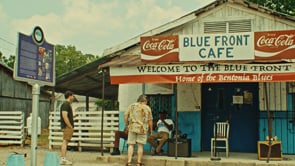
Press play to load the original player. Availability depends on the provider; use the source link if playback is unavailable.
Not one route.
A constellation.
Black stages created points of connection across the country.
Choose a city to open its story.
This map presents a curated selection of documented cities and venues. The Chitlin’ Circuit was not one fixed route, and its networks changed across time, genre, and community.
Everybody welcome
Fannie Mae Duncan’s Colorado Springs Cotton Club brought music, entrepreneurship and interracial gathering together. This full documentary widens the view beyond the better-known eastern and southern stages.
Watch at the original source ↗
Press play to load the original player. Availability depends on the provider; use the source link if playback is unavailable.
Lexington was
part of the story.
A stage in the heart of the East End.
The Lyric opened in 1948 at Third and Deweese streets—today’s Elm Tree Lane. Built first as a movie house for Black audiences, it became a place for concerts, jazz and rhythm and blues, vaudeville, fashion shows, pageants, local performers, films, and community gathering.
Around the theatre, Black-owned businesses found customers and visibility. The original Lyric closed in 1963. After decades of advocacy and public investment, the restored Lyric Theatre and Cultural Arts Center reopened in 2010, joining preservation to living culture.
Historic walls.
Living culture.
To preserve a theatre is to protect evidence: that Black audiences sustained national culture; that artists refined their craft before communities who knew how to listen; and that Lexington participated in a larger American story.
Sources and
image credits.
Selected historical sources
Video, audio & interactive research
Videos use the original broadcasters’ players. Audio excerpts are catalog previews courtesy of Apple Music; full recording links appear beside every player. They are not recordings of Lyric engagements. Playback rights and availability remain with the original providers.
- How a town became a sanctuary — PBS Origins · In the Margins · 10m 49s · CC
- The Circuit in cultural memory — PBS NC · MUSE · 20m · CC
- A life on the road — Mississippi Public Broadcasting · Documentary trailer
- Everybody welcome — Rocky Mountain PBS · Colorado Experience · 50m 32s · CC
- PBS American Masters: Michael Dinwiddie interview and transcript
- Further viewing: VPM documents its Churchill Beach film in its Telly Awards announcement.
Artist and venue pop-ups link their individual research sources. Media reviewed October 9, 2026.
Editorial note
The absence of an exact performance date does not diminish an artist’s relationship to the theatre. It reflects this exhibition’s decision not to invent precision where surviving evidence does not provide it.