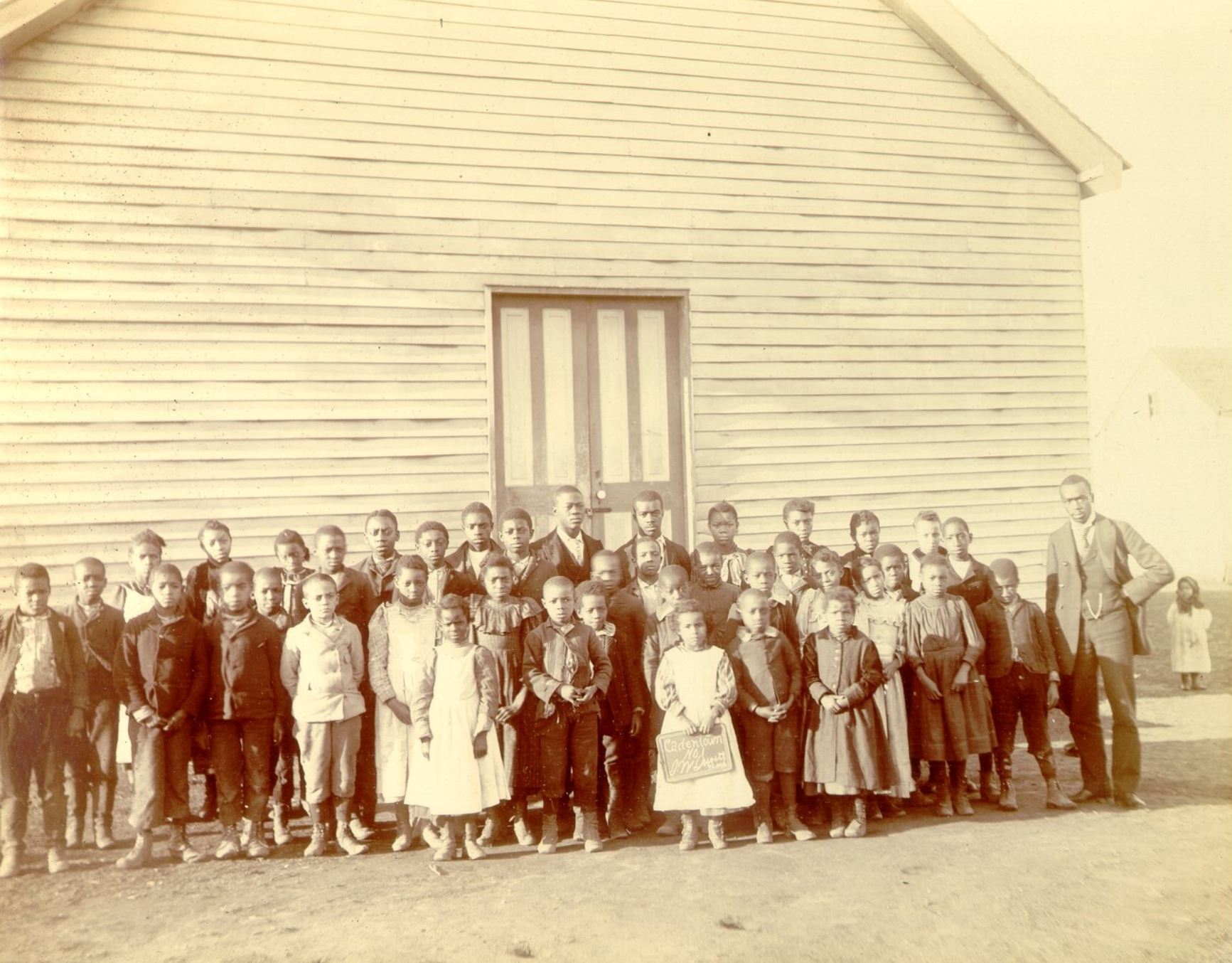
Under segregation, Black families and educators created places where children could learn, belong, and imagine what came next. These schools held the hopes of entire communities.
This growing collection connects documented school histories with photographs, places, and the legacy that remains. Explore at your own pace. There is always another story to find.
Choose a place. Open a story. See the Bluegrass in a new way.
THE SEARCH CONTINUES
No stories in this view yet.
FROM THE ATLAS / A CLOSER LOOK
545 NORTH UPPER STREET · LEXINGTON
PAUL LAURENCE DUNBAR HIGH SCHOOL
Dunbar. A lasting legacy.
A school. A community. A world of possibility.
At North Upper Street, Dunbar became a place of learning, ambition, and belonging for generations of Black Lexingtonians. Its classrooms closed as a high school in 1967. Its place in the community continues.
A few stories. A little wonder. Choose a digital journey through the collection.
These are story journeys through the exhibit, rather than driving or walking routes.
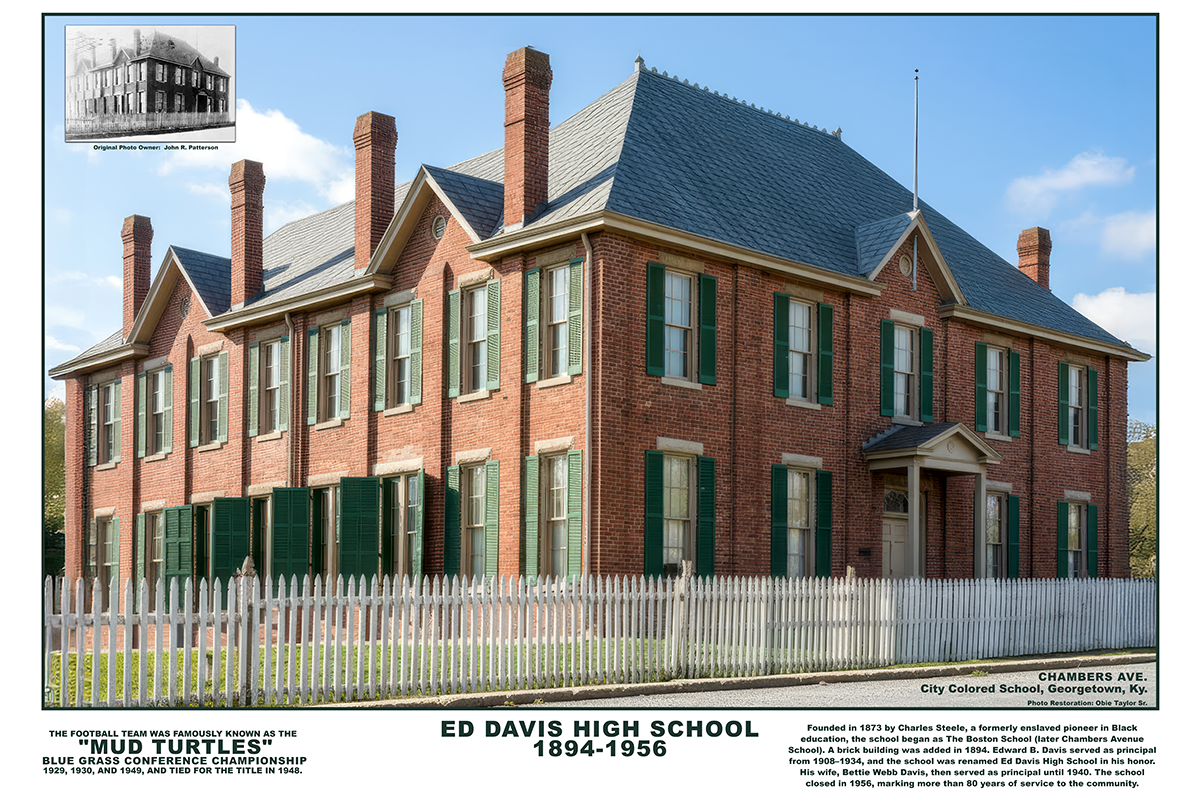
From the atlas / A closer lookChambers Avenue · Georgetown · Scott County
Ed Davis School
A school. A lasting reach.
Learning. Leadership. A community’s ambition.
On Chambers Avenue, Black educators and families built a place for Georgetown’s children to learn and look ahead. Under Edward B. Davis, the school expanded to a four-year high school. Named in his honor in 1929, Ed Davis nurtured scholars, community leaders, and the football team remembered as the Mud Turtles.
View the full image ↗ Restoration: Obie Taylor Sr. · Original photograph: John R. Patterson, as credited in the supplied artwork.
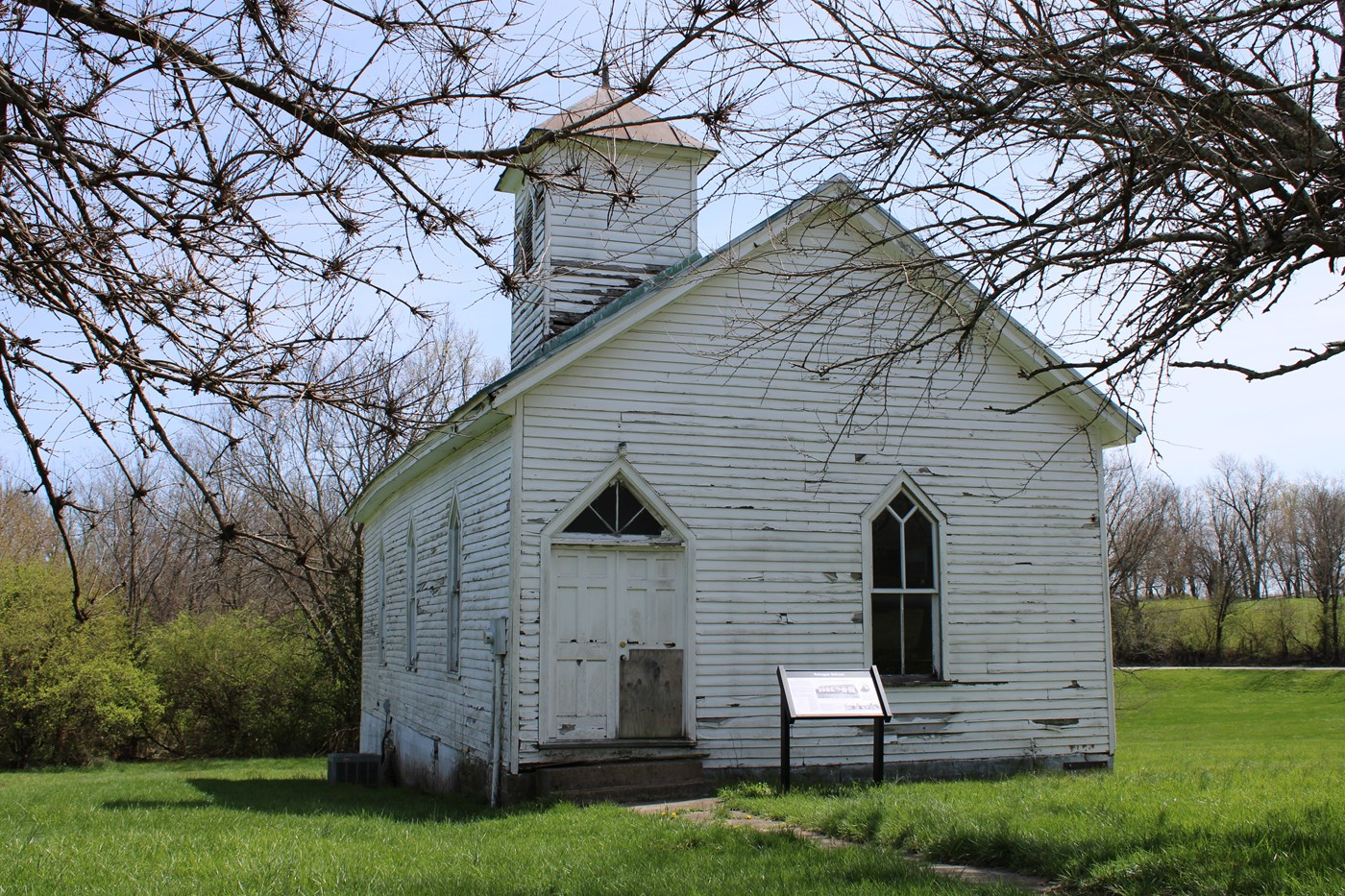
Fee Memorial Church · National Park Service Site photograph; capture date not supplied. Explore the source ↗
FRANKFORT · KENTUCKY’S PUBLIC HBCU
1886 — 2026 / 140 YEARS OF POSSIBILITY
Kentucky State. A higher calling.
From a classroom for future teachers to a future shaped by generations.
On a hill above Frankfort, a school founded to prepare Black teachers grew into a university with a mission of education and service. Discover Kentucky State’s place in the story of Black education—and the legacy still unfolding on The Hill.
A mentor who believes. A scholar who sees what comes next.
The story of Black education continues in the opportunities we create today. At BMW Academy, Saturday learning, mentorship, college preparation, and journeys beyond Kentucky help young men imagine—and prepare for—a larger future.
IN THEIR OWN WORDS Hear the academy’s story · Official BMWA film
THE EDUCATOR BEHIND THE VISION
Dr. Roszalyn “Rosz” Akins
Founder & Executive Director
An educator’s belief in young people became a program built around their potential.
06 / THE LEGACY CONTINUESLEXINGTON, KENTUCKY · EST. 2012
FROM BMW TO A NEW CHAPTER
Carter G. Woodson Academy.
From a Saturday promise to a school of possibility.
The mentoring model developed by Black Male Working Academy helped inspire a public-school pathway. Since fall 2012, Carter G. Woodson Academy has paired college preparation with African American history and culturally responsive teaching. [1–2]
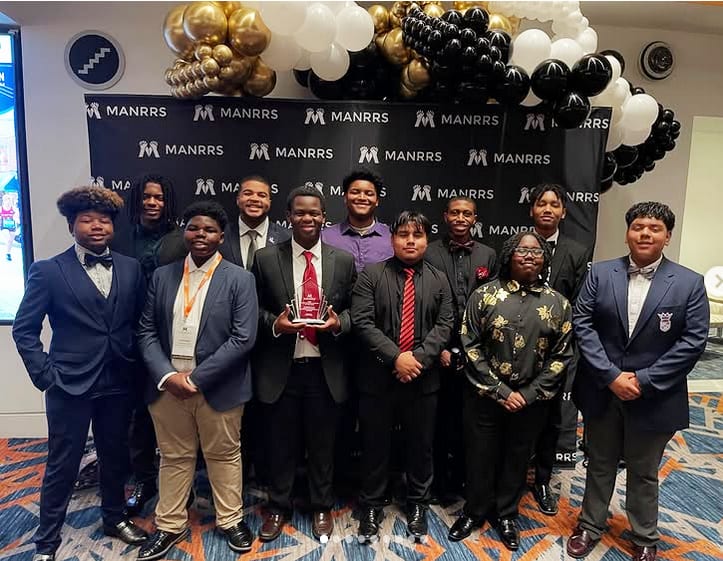
LOOK CLOSER ↗Ambition, recognized. Woodson’s Agriculture Scholars received the inaugural National Junior MANRRS Chapter of the Year award in April 2025. Photograph published by Fayette County Public Schools. Read the school’s announcement ↗
HISTORY IN THE CLASSROOM.POSSIBILITY BEYOND IT.
THE IDEA THAT GREW
Follow the connection.
Select a year. Discover how community belief helped open a new door.
2005
SATURDAY LEARNING. LASTING BELIEF.
A community invests in its sons.
In her account of BMW Academy’s beginnings, Roszalyn “Rosz” Akins describes starting with one middle school and 40 boys in 2005. Mentors, academic support, and college and cultural experiences helped young men see more possibilities for their lives.
On October 24, 2011, WUKY reported that Fayette County Public Schools would use Black Males Working Academy as the model for its first all-male school. Akins was to serve as dean of students. The connection was one of educational influence; BMW’s community program continued its own work.
Carter G. Woodson Academy launched in fall 2012. The college-preparatory program now serves young men in grades 6–12, connecting rigorous study with African American history and culture. Mentoring, tutoring, and learning beyond the classroom extend that vision.
Woodson’s Agriculture Scholars earned the inaugural National Junior MANRRS Chapter of the Year award. Adviser Jacob Ball and students accepted it in early April 2025. Their work connects leadership with opportunities in agriculture, science, technology, engineering, and related fields.
Open the academy’s six “Well Principles.” Together, they point toward preparation for college, career, and life. Explore the school’s philosophy ↗
01 Well Behaved +
Take responsibility for choices and meet the community’s expectations.
02 Well Mannered +
Bring consideration and respect to interactions with others.
03 Well Dressed +
Arrive ready to learn, following the academy’s dress expectations.
04 Well Spoken +
Develop the confidence to communicate clearly and thoughtfully.
05 Well Read +
Read regularly to build vocabulary, understanding, and expression.
06 Well-Traveled +
Learn through cultural experiences, field trips, and journeys abroad.
Why Carter G. Woodson? +
The academy bears the name of the historian and educator known as the Father of Black History. A Berea College graduate, Woodson argued that African American experiences and achievements belonged in everyone’s education. The school connects his name to a curriculum that makes that history visible.